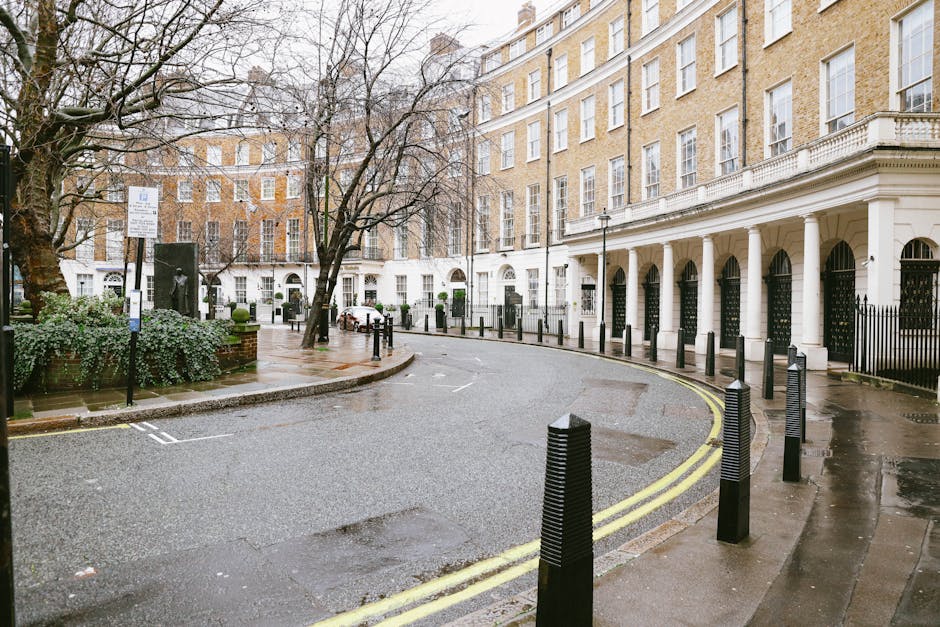
Grosvenor Square Estate Move Checklist for Mayfair Residents
Moving home in Mayfair can feel wonderfully exciting and slightly chaotic at the same time. If you are leaving a Grosvenor Square address, the details matter more than most people expect: lift bookings, concierge arrangements, parking access, fragile furniture, building rules, and the simple reality that a move in central London rarely happens in a perfectly straight line. This Grosvenor Square estate move checklist for Mayfair residents is designed to keep things calm, organised, and realistic.
Whether you are moving from a mansion flat, a townhouse, or a managed estate apartment, the right checklist saves time and avoids the sort of problems that only show up on moving day. You know the kind - a sofa that will not turn the corner, boxes labelled badly, the van waiting while someone searches for keys, or a concierge who needs notice you did not quite give. Let's make it easier.
For readers who want broader local context before moving, our local guide to living in Mayfair is a useful companion, and if you are comparing removal support, you can also review our services overview and removals in Mayfair page.
Table of Contents
- Why Grosvenor Square estate move checklist for Mayfair residents Matters
- How Grosvenor Square estate move checklist for Mayfair residents Works
- Key Benefits and Practical Advantages
- Who This Is For and When It Makes Sense
- Step-by-Step Guidance
- Expert Tips for Better Results
- Common Mistakes to Avoid
- Tools, Resources and Recommendations
- Law, Compliance, Standards, or Best Practice
- Options, Methods, or Comparison Table
- Case Study or Real-World Example
- Practical Checklist
- Conclusion
- Frequently Asked Questions
Why Grosvenor Square estate move checklist for Mayfair residents Matters
Grosvenor Square is not a typical move. It sits in one of London's most recognisable residential pockets, with high-value homes, managed buildings, concierge teams, parking restrictions, and neighbours who quite reasonably expect disruption to be handled properly. A vague moving plan is usually where stress begins. A proper checklist brings structure to a day that can otherwise unravel in tiny, annoying ways.
In a central Mayfair move, the checklist is doing more than reminding you to pack the kitchen. It helps you coordinate building access, plan for large or delicate items, confirm removals insurance, and avoid delays caused by bad timing or missing paperwork. If you are selling, buying, or simply moving within the area, a clear plan also supports your solicitor, estate agent, porters, and removals team. Everyone knows what is happening, and that is half the battle.
There is also a practical money angle. Delays can lead to extra waiting charges, wasted labour, or even a second visit if access is blocked. Truth be told, a well-built checklist is one of the cheapest ways to protect an expensive move.
If you want to understand the moving side of things in more detail, our house removals Mayfair page explains how larger residential moves are typically managed, while the flat removals Mayfair service is often useful for estate apartments and smaller properties with tighter access.
How Grosvenor Square estate move checklist for Mayfair residents Works
The checklist works best when you treat the move as a sequence, not a single event. Start by mapping the move backwards from your target moving day. Then break the process into practical layers: building permissions, packing, transport, fragile items, utilities, and final handover. Simple enough on paper. Slightly less simple in a real Mayfair hallway at 8:15 a.m. with a lift booked and a crate still unlabelled. Still, it works.
A good estate move checklist usually has three stages:
- Planning stage: confirm dates, access requirements, parking, keys, and inventory.
- Preparation stage: sort possessions, pack room by room, and arrange any specialist handling.
- Moving day stage: supervise the loading route, protect entrances, check handover items, and keep documents to hand.
For Grosvenor Square and nearby streets, the key is to anticipate building-specific rules. Some properties require booking lift time, protecting communal areas, or notifying a porter or management office well in advance. Others may have loading windows that are tighter than you expected. The checklist is there to stop these details from being discovered at the last minute.
One thing we always suggest: treat the move like a short project. A project has milestones. A project has owners. A project has a backup plan when the weather turns wet or the lift is unexpectedly unavailable. That mindset makes a difference.
Key Benefits and Practical Advantages
The main benefit of a move checklist is not tidiness for its own sake. It is control. In a high-value London move, control means fewer surprises, less damage risk, and a smoother handover for everyone involved.
Here are the benefits people notice most:
- Less last-minute panic: you are not hunting for documents, tape, or keys on moving morning.
- Better coordination: estate agents, solicitors, porters, and removals teams all work from the same plan.
- Reduced damage risk: fragile items, artwork, mirrors, and furniture are packed and handled properly.
- Cleaner access management: you are less likely to block a lobby, damage a corridor, or miss a booking slot.
- Faster settling-in: boxes are labelled clearly, so the essentials are found quickly.
There is also a softer benefit: you feel less emotionally flattened by the day. Moving is a strange combination of logistics and attachment. The kettle, the charger, the favourite lamp, the hallway smell of old wood polish - it all matters more than you think. A checklist gives the day some shape.
If you are weighing up the right support, our removal services in Mayfair page is a good place to see the options available, including more specialist help where needed.
Who This Is For and When It Makes Sense
This checklist is for anyone moving in or out of Grosvenor Square or the surrounding Mayfair streets, but it is especially useful for residents in managed buildings, larger apartments, and properties with tricky access. If you have a porter, shared entrance, basement storage, or furniture that needs careful dismantling, you will get more value from a structured plan.
It makes sense if you are:
- moving from a Grosvenor Square apartment to another London property;
- selling a home in Mayfair and working to a fixed completion day;
- relocating within the same estate and want the move to stay discreet;
- moving valuable furniture, antiques, or a piano;
- downsizing and need storage or phased removal;
- working to a short deadline and want to avoid a messy rush.
It can also help if you are moving out of London temporarily and want to avoid overpacking. The temptation is always to carry too much. Then again, everyone says that right up until they open the top cupboard and find six chargers, three mystery cables, and a fondue set. Human nature, really.
For those planning a sale before a move, it is worth reading our guide on selling a home in Mayfair, which covers some of the practical pressures that often overlap with moving schedules.
Step-by-Step Guidance
The most reliable way to manage a Grosvenor Square move is to work backwards from moving day. Here is a practical sequence that suits most Mayfair residents.
1. Confirm your moving date and access window
Before you do anything else, confirm the completion date, target move time, and whether your building has any access restrictions. If you live in a managed estate, ask about lift reservations, porter availability, protection requirements, and loading arrangements. If parking needs to be pre-arranged, sort that early. A 10-minute delay in central London can become a much larger headache very quickly.
2. Walk the property and decide what is moving
Do a full room-by-room review. Decide what is going with you, what should be sold, donated, recycled, or stored. This is especially useful in larger homes where items may have been kept in secondary rooms for years. The less you move unnecessarily, the cleaner the day becomes.
3. Create a packing order
Pack by priority, not by whatever is nearest. Seasonal items, books, decorative pieces, and spare linen can go first. Everyday essentials should stay out until the end. Keep one clearly marked essentials box for the first 24 hours in the new home: kettle, mugs, chargers, medication, toiletries, documents, and a change of clothes.
4. Arrange specialist handling where needed
Not every item should be treated like a standard box. Pianos, marble tables, large mirrors, artwork, designer furniture, and older pieces often need specialist care. If you have anything awkward or valuable, do not guess. Ask in advance. Our piano removals Mayfair service is a useful example of how specialist items are handled safely and with the right equipment.
5. Prepare the building and the route
Measure doorways, note stair turns, and check whether larger furniture can fit through lifts or service entrances. In some Mayfair buildings, the loading route matters as much as the packing itself. It sounds obvious, but people still discover a wardrobe problem only when the van is already outside. A bit of measuring saves a lot of sighing.
6. Label boxes clearly and consistently
Every box should show the room it belongs to and a short description of its contents. Keep labels on more than one side if possible. Use a simple system like kitchen / fragile / first-use items. If you are moving several rooms, colour-coding can help too. Nothing fancy. Just easy to read.
7. Protect the old and new property
Ask what floor protection, door covering, and wall protection are needed. Communal hallways and lifts in upscale properties should be treated carefully. Good removals teams plan for this by using blankets, covers, and proper handling methods. It is not just about avoiding damage; it is about showing respect to the building and the neighbours.
8. Settle the handover details
Before leaving, check meter readings if relevant, collect keys, remove all personal items, and make sure nothing has been missed in cupboards, balconies, or storage spaces. The last 20 minutes are where small mistakes hide. People forget drawers. They forget the loo roll. They forget the hallway cabinet. It happens all the time.
9. Unpack strategically
Once you arrive, start with the essentials and the bedrooms. Leave decorative items for later. If you try to make the whole home perfect on day one, you will probably tire yourself out. Better to make the space liveable first and polished later. You do not need a showroom by tea time.
Expert Tips for Better Results
A strong move in Mayfair is often defined by the small choices. Not dramatic ones. The small ones.
- Book your removals team early: premium central London slots can be limited, especially at the end of the month.
- Use a detailed inventory: this helps with both packing and insurance awareness.
- Keep valuables separate: passports, jewellery, passports, keys, and important papers should travel with you.
- Check insurance cover before moving day: do not assume every item is covered in every scenario.
- Communicate with building staff: a quick call or email can prevent a lot of awkwardness later.
- Choose the right vehicle size: an oversized van may be awkward; an undersized one may mean multiple trips.
If you need a smaller, quicker solution for a compact move or a single load, a man with a van in Mayfair can be the practical choice. For some residents, that is all they need. For others, especially in a larger estate move, a fuller service is worth it because coordination becomes easier.
Another useful tip: take photos before disassembling anything. Not glamour photos. Just practical ones of cable setups, shelf positions, and furniture fittings. You will thank yourself later, probably while holding a mysterious screw and wondering where it belongs.
Common Mistakes to Avoid
Most moving problems are predictable. That is the good news. If you know where people usually go wrong, you can sidestep the mess.
- Leaving access checks too late: building rules and parking arrangements should be confirmed well before moving day.
- Packing without a system: random boxes are a nightmare at the other end.
- Underestimating fragile items: glass, art, lamps, and antiques deserve proper packing.
- Forgetting storage needs: if there is a gap between properties, arrange storage before the stress peaks.
- Not checking the weather: rain is not rare in London, and wet pavements make loading slower and more awkward.
- Assuming everything can be done on the day: admin, access, and disassembly are easier when handled earlier.
One subtle mistake is failing to match the move plan to the type of property. A modern apartment, a mansion flat, and a mews house all behave differently on moving day. The staircase, the lift, the entrance width, and even the parking angle can shift the whole strategy. That is why local experience matters.
For difficult timing or short-notice jobs, our same day removals in Mayfair page may be relevant, although it is always better to plan ahead where possible.
Tools, Resources and Recommendations
You do not need a pile of complicated gear to move well. But a few practical tools make the whole job easier.
- Sturdy moving boxes: preferably in a range of sizes so heavy items do not end up in oversized boxes.
- Packing paper and bubble wrap: useful for glassware, frames, and fragile decor.
- Strong tape and labels: basic, but essential.
- Furniture covers and blankets: helpful for protecting upholstery and polished finishes.
- Marker pens and a checklist sheet: yes, a simple paper list still works brilliantly.
- Storage option: useful if completion dates or refurbishment timings do not line up neatly.
If you need packing materials or advice on what to buy, our packing and boxes Mayfair page is a sensible starting point. And if you are not sure whether you need temporary storage, take a look at storage in Mayfair before making assumptions about space at the new property.
We also recommend checking the company background and service fit rather than comparing on price alone. If you are reviewing providers, our about us page and removal companies Mayfair page help explain what to look for in a trusted local team.
Law, Compliance, Standards, or Best Practice
Moving home in Mayfair does not usually involve complex legal procedure for the removals team itself, but there are important best-practice and compliance points to keep in mind. These vary by property, lease, building management, and the type of items being moved.
Common areas to check include:
- Building rules: many managed properties have move-in and move-out procedures, lift protection rules, and access bookings.
- Parking and loading arrangements: in central London, vehicle access often needs planning and may be limited by time or location.
- Insurance: reputable removals businesses should be able to explain how cover works and what the limits are.
- Health and safety: safe lifting, route planning, and property protection are part of responsible practice.
- Data and privacy: if documents or files are being moved, keep them secured and avoid leaving sensitive paperwork unattended.
For reassurance on operational standards, it is sensible to review a company's insurance and safety information and, where relevant, its health and safety policy. If you care about disposal and decluttering, the recycling and sustainability page is also worth a look.
Best practice is simple: ask questions early, keep records where needed, and do not leave assumptions hanging. Small details. Big difference.
Options, Methods, or Comparison Table
Different homes need different move methods. Here is a simple comparison to help you choose the right approach for a Grosvenor Square move.
| Move option | Best for | Advantages | Watch-outs |
|---|---|---|---|
| Full house removals | Large properties, family homes, full inventories | Most organised, good for multiple rooms and complex access | Needs more planning and usually a fuller schedule |
| Flat removals | Apartments, mansion flats, estate residences | Efficient for building access and smaller load sizes | Lift bookings and corridor protection matter a lot |
| Man and van | Smaller moves, partial loads, flexible timing | Quick, practical, often cost-effective | Not always ideal for high-volume or specialist items |
| Storage-led move | Delayed completions, renovations, temporary downsizing | Good buffer when dates do not align | Requires clear labelling and inventory control |
There is no single right answer. The right option depends on your property, your timeline, and how much you want to self-manage. For a lot of Mayfair residents, the sweet spot is a combination: professional removals for the heavy lifting, plus storage for a few awkward items that need time.
Case Study or Real-World Example
Here is a realistic example from the kind of move that happens often around Grosvenor Square. A couple were moving from a managed apartment into a nearby townhouse. The apartment had lift access, but the new property had a tighter staircase and a narrower landing. They also had artwork, a heavy dining table, and a few boxes of books that had somehow multiplied in the cupboard.
Instead of treating the move as one big load-and-go day, they broke it into layers. The fragile pieces were packed first. The larger furniture was measured and flagged in advance. The movers were briefed on access at both ends. A storage plan was put in place for one oversized cabinet that would have been awkward to force through the staircase. Nothing dramatic. Just sensible planning.
The result was a calmer moving day, fewer delays, and less risk to the property. The couple were able to settle in the same evening without the usual "where is the kettle?" confusion. Not perfect, because no move ever is, but manageable. And that is the real target.
If your move involves mixed furniture sizes or a more delicate interior, the furniture removals Mayfair service and the practical advice in our Mount Street packing tips for mews homes article can help you plan more realistically.
Practical Checklist
Use this checklist as your moving-day backbone. Print it, copy it into a notes app, or keep it on the kitchen counter. Whatever works.
- Confirm completion date, move time, and access arrangements
- Check building rules, lift booking, and any concierge requirements
- Reserve parking or loading access where needed
- Book removals support early
- Decide what to keep, sell, donate, recycle, or store
- Measure large furniture and key access points
- Order boxes, tape, packing paper, and covers
- Pack non-essential items first
- Prepare a clearly marked essentials box
- Separate valuables, documents, and personal items
- Confirm insurance and handling for fragile or specialist items
- Protect floors, doors, and communal areas
- Take meter readings if required
- Check every room, cupboard, drawer, and storage space before leaving
- Unpack the kitchen and bedrooms first at the new address
Expert summary: if you do nothing else, get access, packing, and specialist item handling sorted early. Those three things are usually what decide whether a Grosvenor Square move feels orderly or a bit fraught. Everything else can be adjusted.
For a quote or to discuss a tailored move plan, you can always start with our pricing and quotes page or reach out through contact us. A quick conversation now can save a lot of back-and-forth later.
Conclusion
A Grosvenor Square move does not need to feel overwhelming. With the right checklist, clear communication, and a little local know-how, you can turn a complicated day into a controlled one. The trick is to plan for the actual building, not an idealised version of it. Measure properly. Confirm access. Pack with purpose. Keep the essentials close. Simple, really - though not always easy.
Mayfair moves reward preparation. They also reward calm heads and practical judgement. If you get those parts right, the rest tends to fall into place more smoothly than expected.
Get a free quote today and see how much you can save.
And if you are still in the planning phase, that is fine too. A thoughtful move is usually a kinder one, and there is real comfort in that.
Frequently Asked Questions
What should be on a Grosvenor Square estate moving checklist?
Your checklist should cover access booking, parking, packing, insurance, specialist items, building rules, key handover, and an essentials box for the first night. In managed properties, add lift reservations and porter notifications too.
How early should I start planning a Mayfair move?
Ideally, start several weeks ahead if you can. Larger homes or complex apartment moves benefit from earlier planning because access, packing, and specialist handling take longer than people expect.
Do I need to tell the building management before moving out?
In many Grosvenor Square and Mayfair buildings, yes. It is best to check the move-out procedure in advance because some properties require lift protection, time-slot bookings, or advance notice for contractors.
What is the best way to pack fragile items for a move?
Use sturdy boxes, plenty of packing paper or bubble wrap, and clear labelling. Keep fragile items separated from heavy items and avoid overfilling boxes. If in doubt, specialist packing help is worth considering.
Can I move large furniture through a Mayfair flat or mansion block easily?
Sometimes yes, sometimes not. It depends on lift size, stair turns, hall width, and doorway clearance. Measuring in advance is essential. Do not assume the sofa will fit just because it fit somewhere else.
What if I need storage between properties?
Storage is often the sensible choice when completion dates, refurbishments, or downsizing plans do not line up neatly. It helps reduce pressure and gives you room to move at the right pace.
How do I choose between a full removals team and a man with a van?
For larger homes, fragile belongings, or complicated access, a fuller removals service is usually better. For smaller loads or short local moves, a man and van in Mayfair can be a practical option.
Is removals insurance necessary for a Grosvenor Square move?
It is wise to understand what cover is in place and what exclusions may apply. High-value items deserve extra attention, so ask for clear information before moving day rather than guessing later.
What should I keep with me on moving day?
Keep keys, documents, medication, valuables, chargers, and a change of clothes with you. A small overnight bag is also useful. It saves rummaging through boxes when you are tired.
How can I make moving day less stressful?
Use a room-by-room plan, label everything clearly, confirm access in advance, and avoid leaving admin for the morning of the move. Small preparation steps make the biggest difference.
Do you handle specialist items like pianos or artwork?
Specialist items often require tailored planning and handling. If you have something valuable, awkward, or unusually heavy, ask about the right service well before moving day so the team can prepare properly.
Where can I get a quote for my move in Mayfair?
You can request a quote through our pricing and quotes page or use the contact page to discuss your move directly. A brief description of the property and access details helps a lot.